
Midspirit
Naf - Psyllium Husk
Naf - Psyllium Husk
Couldn't load pickup availability
‼️DONT LET YOUR HORSES AND PONIES BECOME A STATISTIC‼️
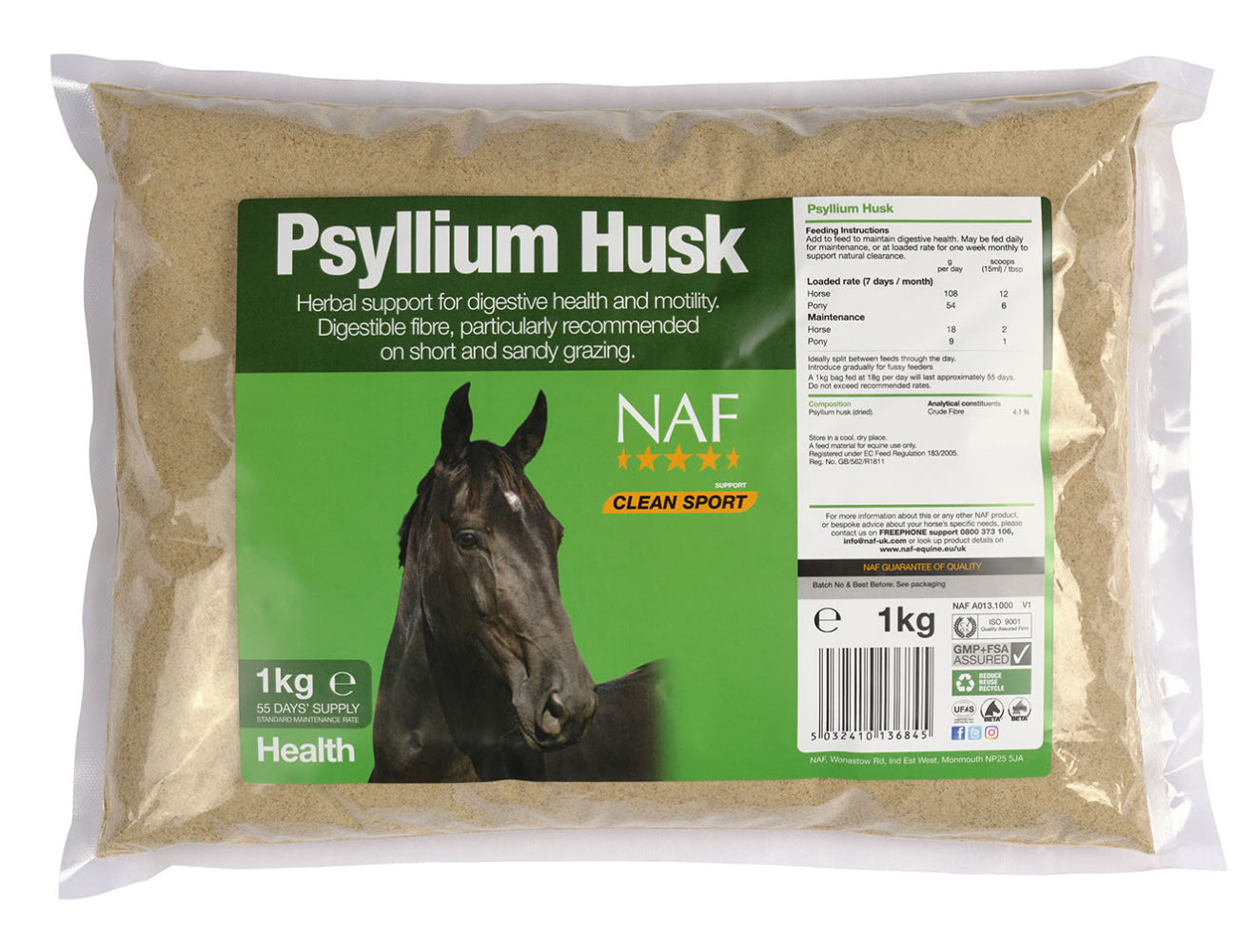
Psyllium Husk is a herbal support for digestive health and motility. Digestible fibre, particularly recommended on short and sandy grazing. It is GMP and FSA assured.
Feeding Directions:
Loading Rate Horse - 108g per day/ 12 scoops per day
Loading Rate Pony - 54g per day/ 6 scoops per day
Maintenance Horse - 18g per day/ 2 scoops per day
Maintenance Pony - 9g per day/ 1 scoop per day
Psyllium must be fed dry to avoid a slimy mush that your horse may refuse to eat. A little wet beet pulp with excess liquid taken out can be included if necessary. There must be unrestricted access to a supply of fresh clean drinking water. Once the feed is prepared then use straight away.
HOW DOES SAND GET INTO THE GUT?
Horses eat it. Some horses will eat dirt – perhaps because they are salt deficient. On poor grazing, horses may pull up roots and ingest sand with the grass or when turned out in a sand school they may ingest the sand with the hay or through boredom. There is definitely an individual variation related to each horse’s grazing pattern because not all horses on the same paddock will accumulate sand in the gut. We often see an increase in the number of sand colics following a certain weather pattern – after a period of dryness, heavy rain will cause the sand from the soil to splash up onto the grassy leaf and therefore it is impossible to eat the grass without the sand.
IF YOUR HORSES ARE NEAR A ROAD, ARE OUT ON SANDY LAND, EVEN GRAZING ON SHORT GRASS AFTER A RAIN STORM THESE CONDITIONS CAN BE A DANGER AND HAVE SAND PRESENT ON YOUR GRAZING LAND.
SO HOW DO YOU FIND OUT IF YOUR HORSE HAS ANY SAND ACCUMULATION IN THE GUT?
- Test the dung – anything more than ½ teaspoon of sand could be significant.
- Using a rubber glove or clear medical glove – place a generous amount of dung and water into the glove and rub between your finger to break it down.
- Leave 10 minutes then rub between your fingers again.
- Wait one minute and feel the tips of the finger you will be able to see and feel how much sand is left in the glove. (1/2 teaspoon requires action).
This is known as a sand dung test. - Tests SHOULD BE CARRIED OUT WEEKLY AFTER A SAND PROBLEM; MONTHLY AS A ROUTINE CHECK, and test all horses, not just one!
WHY IS SAND A PROBLEM IN THE GUT?
Sand is quite rough and can irritate the gut wall as it is dragged along, but most of the problems we see are caused by an accumulation (collecting together) of the sand within the gut.
The horse’s gut is about 30 metres long from mouth to anus (bottom). Its design involves at least 3 hairpin bends and other dramatic changes in diameter – some parts of the gut are only 4cm in diameter (width of tube that food passes through) whilst other parts have a diameter of at least 10cm. These design faults of sudden changes in size and angle of gut make the horse more susceptible to colic.
Because sand is heavy it sinks as it passes along the gut and it starts to collect at the bottom of the gut forming a layer. This layer of sand stops that piece of gut moving correctly (peristalsis is the technical name for the way your gut pumps food along). Over time this layer gets deeper and quite a “weight” of sand can collect as the rest of the food/liquid just moves along over the top of it. The sand can also accumulate at the hairpin bends in the horse’s gut. The weight of the sand can affect the horse’s performance – imagine trying to be athletic with a sandbag strapped to your belly!